Podcast: When the Buzz Stops: Europe’s Wild Pollinator Collapse [25.06.26]
What would happen if Europe’s wild pollinators collapsed? A new study paints a vivid picture of what that world could look like, and the effects stretch far beyond bees and blossoms.
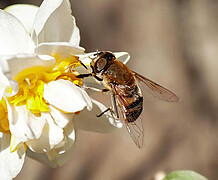
Photo by İlhan Erce Feyizoğlu (Source: https://www.pexels.com)
Dr. Arndt Feuerbacher (KomBioTa Advisory Board Member) and his colleagues modeled how losing wild pollinators would ripple through Europe’s food system. Their results show a clear pattern: yields of pollination‑dependent crops would drop; Europe would lean more heavily on imports; and global food prices—especially for fruits and vegetables—would climb.All of this adds up to an enormous economic hit: €34.4 billion in global welfare losses every year, with €23.8 billion of that inside Europe alone.
But the study also reminds us that not everything can be captured in euros. Wild pollinators keep much of Europe’s natural world running. They help most wild plants reproduce, and those plants feed seed‑eating animals and support entire food webs. Pollinators themselves are food for other species. Remove them, and the effects cascade—fewer plants, fewer insects, fewer birds, less natural pest control, and a less resilient landscape overall.
The takeaway is simple but urgent: the economic losses are huge, but the ecological ones are immeasurable. Protecting wild pollinators isn’t just about agriculture—it’s about keeping the whole system intact.
As well as being a KomBioTa Member, Dr. Arndt Feuerbacher is a Professor in the Faculty of Agricultural Science at the University of Hohenheim in Germany as well as heading the Ecological-Economic Policy Modeling Research Group at the Institute of Agricultural Policy and Markets.
Back to Latest News

